
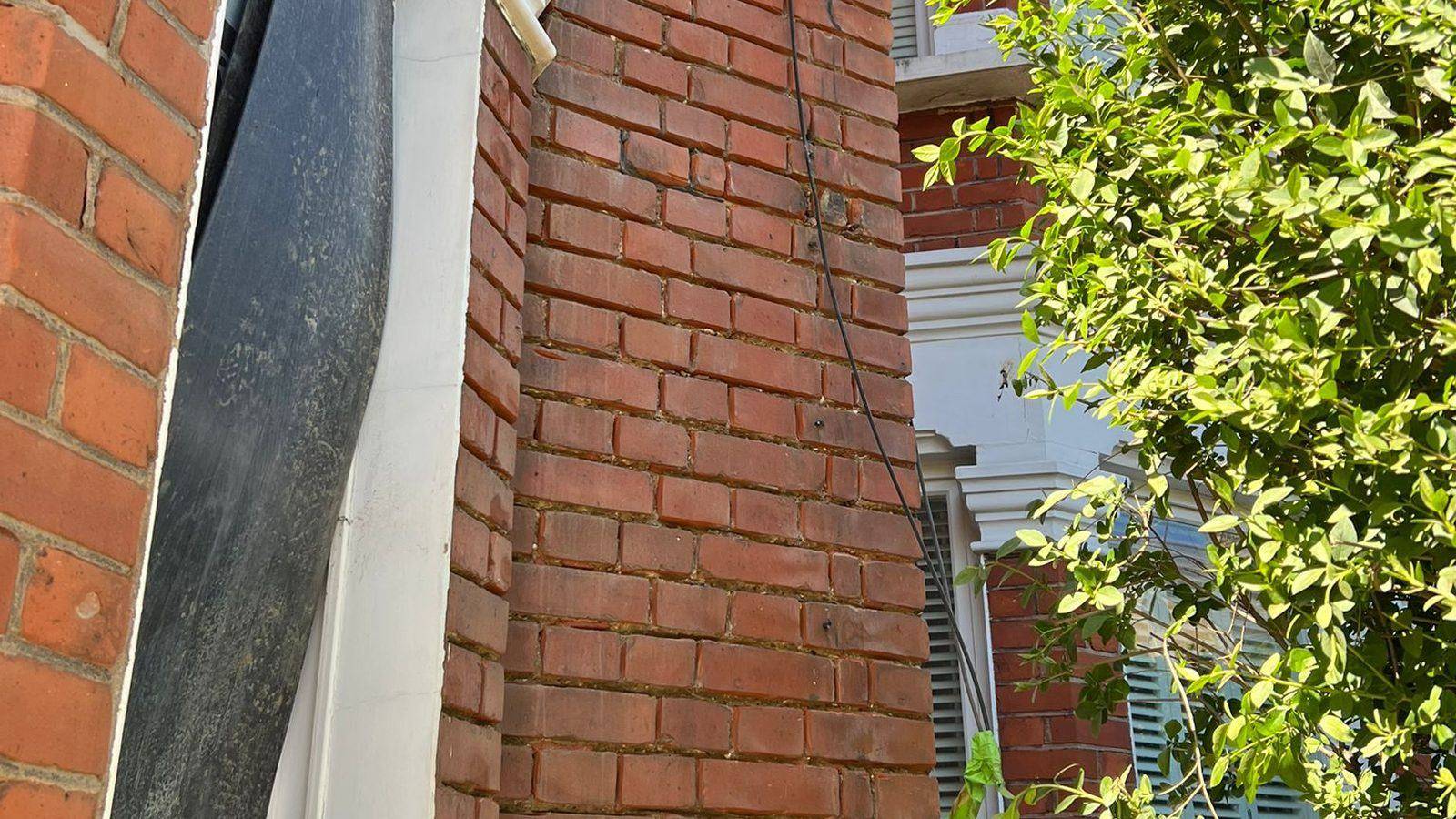
Brick Repair in Camden
Cutting out and replacing cracked, spalled and blown bricks, carefully matched to your existing wall. Serving Camden (NW1) and the surrounding areas.
Free brick repair quote in Camden
Send us the details and we will be straight back to you.
Heritage & conservation specialists
Lime-based restoration of period and listed buildings.
Structural brick stitching
Helical-bar repairs that strengthen cracked and bowing walls.
Trusted across London
Fully insured, working across the capital and home counties.
Brick repair across Camden
Damaged bricks put right, and kept right
Brick repair means dealing with damaged bricks themselves: the ones that have spalled, blown, crumbled or cracked, where the face has come away and the brick behind is exposed to the weather. It is different from repointing, which renews the mortar joints, and different from restoration, which is a whole elevation programme. Often a property needs more than one of them, and part of our job at the assessment is telling you which.
London Bricklayerhave been repairing London's period and listed brickwork since 1973. We cut out and replace failed bricks, match them to the existing wall, and, just as importantly, work out why they failed so the same thing does not happen again in five years. Working across Camden and the surrounding area. Free assessment, honest advice on what actually needs doing, and small jobs genuinely welcome.
The most common failure
Spalled, blown and crumbling brickwork
Spalling is when the face of a brick flakes, blows or crumbles away, leaving a rough, recessed surface and exposing the softer, more porous material behind. You will also hear it called blown or crumbling brickwork. It is the most common brick failure we deal with on London property, and it is almost always a moisture problem rather than a brick quality problem.
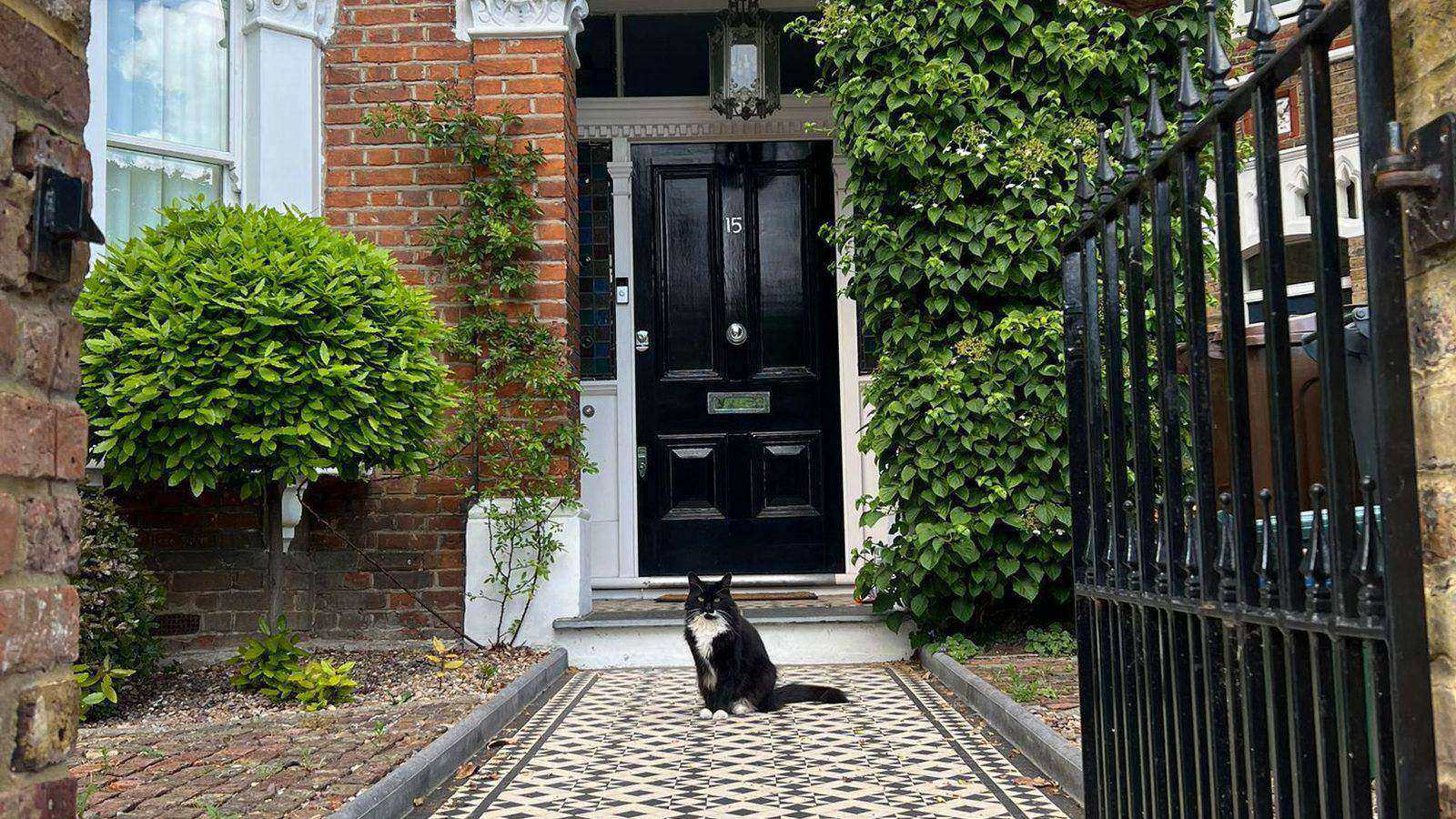
What is actually happening
Most period bricks were fired with a harder, denser outer skin and a softer core. That skin is what keeps the weather out. Water gets into the brick, and when it freezes it expands by roughly a tenth of its volume. If the water cannot escape, the pressure takes the face off. Once the face has gone, the exposed core soaks up water far faster than the skin ever did, so the next winter does more damage than the last.
That is the important part: spalling accelerates. A handful of blown bricks on a parapet or a chimney becomes a much larger area within a few winters, and each cycle takes more material. It is one of the few brickwork problems where waiting reliably costs more than acting.
Where it shows first
- Chimney stacks and parapets, exposed on all sides and taking the worst weather
- Below defective gutters, downpipes and hoppers, where a leak is soaking one area repeatedly
- At low level near the ground, particularly where a path or raised bed has bridged the damp course
- Around cills, copings and string courses, wherever water is being shed onto the wall instead of away from it
- Anywhere previously repointed in cement, which is by far the most common cause we encounter on Victorian and Georgian property
- Elevations that have been sandblasted, where the fired skin was removed by the cleaning itself
A spalled brick face cannot be restored. Once the fired skin is gone it is gone, and no product puts it back. The brick either gets replaced or the wall carries on deteriorating. That sounds blunt, but it is the honest position and it is why the next section matters.
Straight answer
Why filler is not the answer
There is a whole market of brick repair fillers, mortars and kits sold on the promise that you can rebuild a damaged brick face rather than replace the brick. We understand the appeal, and we get asked about it regularly, so here is a straight answer.
Filler does not match, and it never will. A brick face has depth, texture and colour variation created by firing. Filler is a flat, uniform paste. It can look passable for a season on one brick viewed from twenty feet, and it looks like exactly what it is at close range and in raking light. On an elevation with several repairs, the eye picks them out immediately.
It fails at the edges. Filler is bonded to the exposed core of the brick, which is the softest and most friable part. As the wall moves and weathers, the bond breaks at the perimeter, water gets behind, and the repair lifts off, usually taking a little more of the brick with it.
On a spalled brick it makes the underlying problem worse. The brick spalled because moisture could not escape. Coating the face in a dense, relatively impermeable filler restricts evaporation further, so moisture moves deeper into the wall or sideways into the adjacent bricks and joints. It is the same mechanism as cement pointing on a solid wall: you have not stopped the water, you have just changed where the damage happens.
It is not cheaper across any sensible timeframe. A filled brick typically needs redoing within a few years, and by then the brick is in worse condition than when you started, so the eventual replacement is harder. Cutting out and replacing is a permanent repair.
Is there ever a case for it?
Occasionally, and we would rather say so than pretend otherwise. Minor edge chips on an otherwise sound brick, or a temporary measure on a listed building while consent is obtained, can reasonably be dealt with with a matched lime based mortar repair rather than a proprietary filler. That is a considered, specified repair executed by hand, not a tub from a merchant, and it is a holding position rather than a solution. On genuinely spalled brickwork, replacement is the answer.
The permanent repair
Cutting out and replacing damaged bricks
The permanent repair is to remove the failed brick and put a sound one in its place, bedded and pointed so the repair is not obvious. Done properly it is invisible from the pavement and it lasts as long as the wall around it.
Rake out the joints
around the brick by hand, cutting the mortar back so the brick can be removed without disturbing its neighbours
Remove the brick
breaking it out in pieces rather than levering it, since levering transfers load and damages the bricks above and beside it
Clean out the pocket
back to sound material, removing old mortar from the bed and perpends
Check what is behind
because a spalled outer face sometimes turns out to be the visible part of a wetter, more degraded area, and it is better to find that now
Bed the replacement
in mortar matched to the wall, in lime where the wall is a solid period construction, positioning it to line through with the courses either side
Point the joints
to match the surrounding profile, colour and width
Two practical notes. On a solid wall we normally cut out and replace the full brick where access allows, since a half brick or slip bonded to the face is a weaker repair and can eventually spall off itself. And where several adjacent bricks have failed, we work in a staggered sequence rather than removing a block of them at once, so the wall above stays supported throughout.
The skill that matters
Matching replacement bricks
The repair method is straightforward. Finding the right brick is the part that takes experience, and it is the difference between a repair you cannot see and a patchwork of obvious replacements.
- Sourcing by type. London stocks, reds, gaults and multis vary considerably by period and by area, and a modern equivalent rarely reads correctly next to a Victorian brick
- Reclaimed bricks, which are usually the honest answer on period property, since they carry the right size, texture and weathering. Sourcing the right reclaim takes time, which is worth knowing when you set expectations on timescale
- Size and coursing. Older bricks are frequently a different size from modern standards, and a brick that is close but not right throws the joint widths out and shows immediately
- Orientation and face selection, choosing which face of a reclaimed brick goes outward to best match the weathering around it
- Brick tinting where a sourced brick is right in every respect but a shade out, a heritage technique we use routinely
- Mortar matching for the joints around the repair, since a correct brick in the wrong mortar still reads as a patch
Where we can, we take bricks from a concealed part of the same building, such as a rear return, an internal wall or below ground level, and use those for the visible repair, then make good the concealed area with the closest available match. On a hard to match elevation this is often the best result available, and it costs nothing extra in materials.
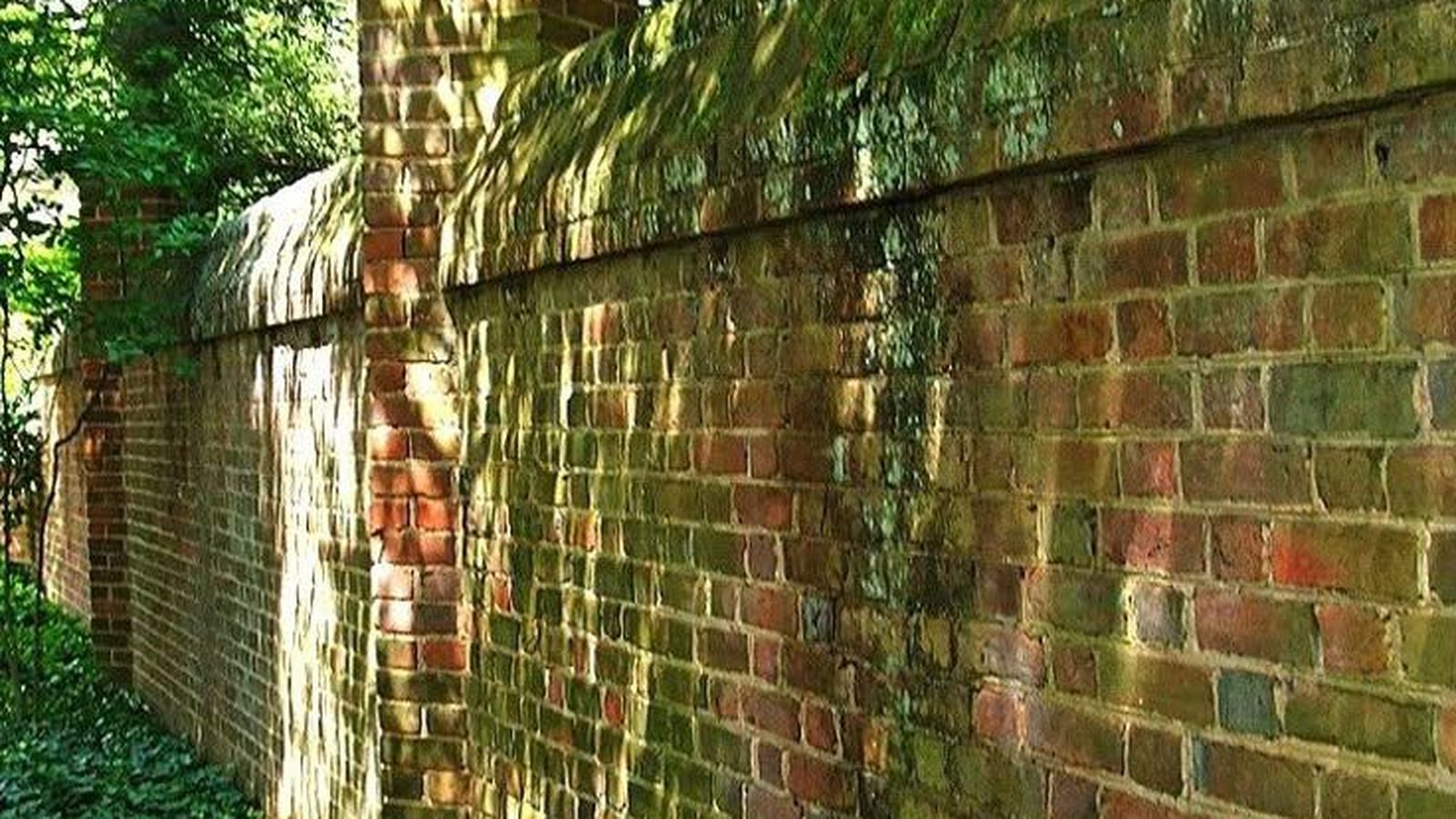
No job too small
Small repairs and one off jobs
A recurring frustration people describe to us is that nobody will come out for a small job. Two blown bricks by the front door, a damaged cill, a few crumbling bricks on a garden wall, and every contractor either does not return the call or quotes as though it were a full elevation.
We take small brick repairs on. Individual bricks, small patches, a single cill or a section of garden wall are all work we are happy to price. It is worth being straight about two things, though.
Higher cost per brick
Small jobs carry a higher cost per brick than larger ones, because getting to site, setting up, sourcing a matching brick and mixing a matched mortar takes the same effort whether you are replacing two bricks or twenty. That is not a markup, it is arithmetic, and we would rather explain it upfront than have it look like an odd quote.
Scheduled around larger work
A two brick repair may wait a little longer for a slot than an urgent structural issue would. We will tell you honestly when we can get to you rather than booking a date we cannot keep.
If you have a small job and access is straightforward, send us a few photographs and we can often give you a good indication without a visit.
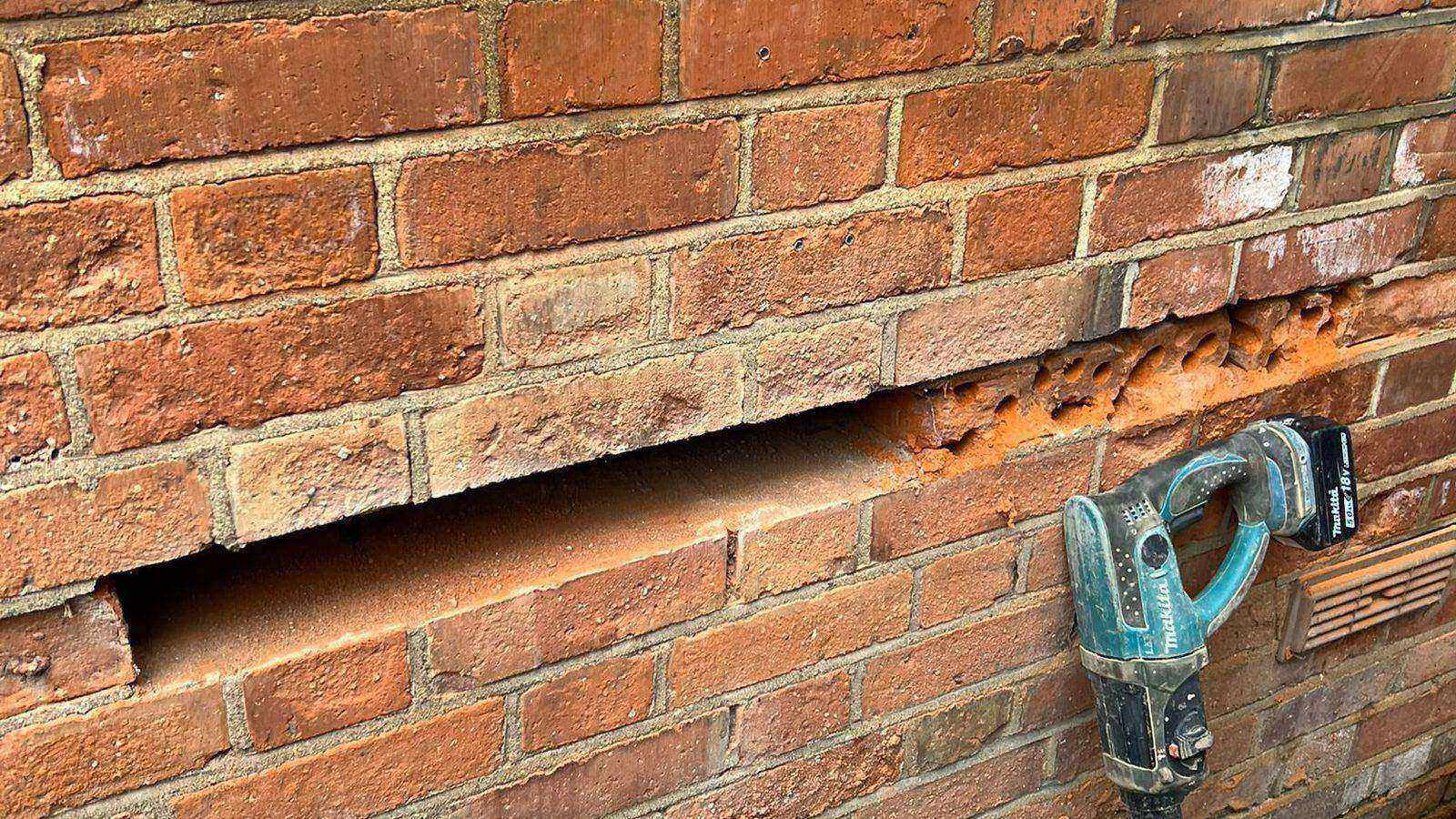
Tell them apart first
Cracked brickwork: is that a repair or something more?
Cracking is a different problem from spalling, and it matters to tell them apart before anyone starts work.
Spalling is surface deterioration. Individual bricks have lost their faces, the wall has not moved, and replacing the bricks solves it.
Cracking usually means movement. If a crack runs through several courses, steps diagonally through the mortar joints, is wider at one end than the other, or has bricks cracked through rather than just the joints, the wall has shifted. Replacing the cracked bricks in that situation is cosmetic: the wall moves again and the repair opens up.
Where the wall has moved, the usual answer is structural brick stitching, tying the brickwork back together with stainless helical bars bedded into the bed joints, and on more significant movement that follows a structural engineer's assessment. The critical step is establishing the cause first, whether that is foundation movement, thermal expansion with no movement joint, failed lintels, cavity wall tie corrosion or tree roots.
Bring us a few photographs and we will tell you which category yours falls into, and whether you need a bricklayer, an engineer or simply a note in the diary to check it again in six months. Not every crack is serious, and we will say so when it is not.
Two materials, one elevation
Brick and stone repair
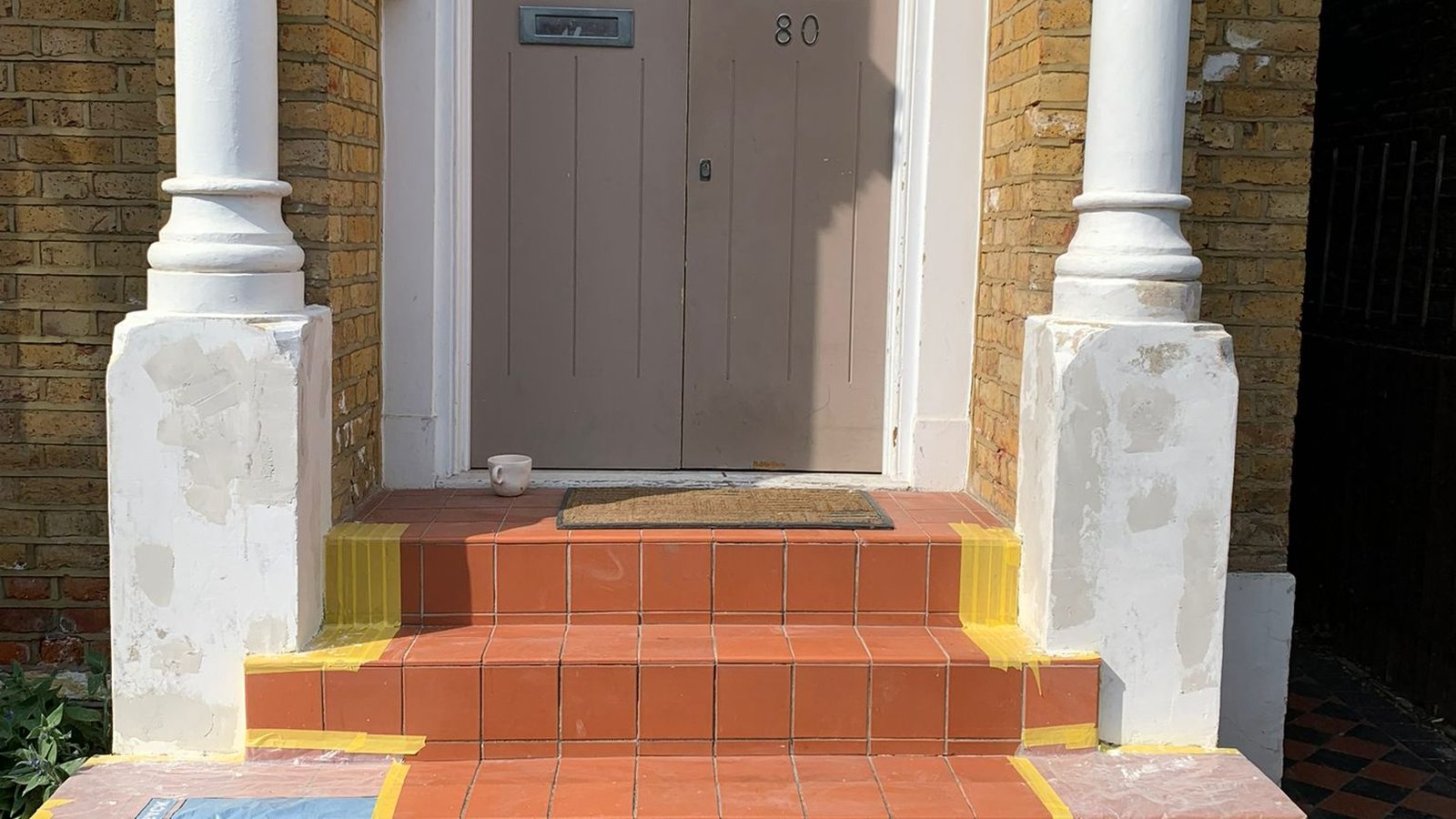
Plenty of London elevations combine the two, with brick walls and stone cills, copings, string courses, steps, lintels and door surrounds. Stone fails differently from brick, and it needs a different approach.
- Stone cills, copings and string courses repaired or replaced, since these are the elements shedding water off the wall and their failure often explains brick damage below
- Portland, York and Bath stone and other stone types commonly found on London property
- Stone indents and piecing in, cutting out failed sections and letting in matched new stone rather than replacing a whole element
- Mortar repairs to stone where a specified lime based repair is appropriate and the alternative would mean losing original fabric
- Steps, thresholds and plinths, which take heavy wear and are frequently the most damaged stonework on a property
Where brick and stone meet is often where problems start, since the two weather at different rates and the junction is a natural water path. We look at both together rather than repairing one and leaving the other.
Fix the cause, not just the damage
Why bricks fail in the first place
This is the part that determines whether your repair lasts. Replacing failed bricks without addressing the cause means replacing them again, and any contractor who quotes without asking why the bricks failed is selling you half a job.
- Cement pointing on a solid wall. The most common cause we see on period property. Hard, impermeable mortar traps moisture in the wall and forces evaporation out through the brick face, which then spalls. Repairing the bricks without raking out the cement guarantees a repeat
- Defective rainwater goods. A leaking gutter joint, cracked downpipe or blocked hopper soaking one area of wall repeatedly. Cheap to fix and frequently the whole explanation
- Bridged or failed damp proof course. Raised paths, patios, flower beds or render carried down past the DPC, letting ground moisture into the wall above it
- Sandblasting or aggressive cleaning. Abrasive cleaning removes the fired skin of the brick, leaving the soft core exposed. This is irreversible and is why we never sandblast historic brickwork
- Water repellent coatings and sealants, marketed as protection, which restrict evaporation and can drive moisture and salts into the brick body
- Poor detailing at cills, copings and parapets, throwing water onto the wall instead of clear of it
- Salt crystallisation, where salts carried in solution crystallise behind the brick face and push it off, common near ground level and on walls with a history of damp
- Frost on already saturated brickwork, which is the mechanism, but rarely the root cause on its own
At the assessment we look for the cause as well as the damage, and we will tell you if the real fix is a gutter repair or lowering a flower bed rather than a brickwork invoice.
Transparent pricing
What affects the cost of brick repair
Brick repair is quoted from an assessment or from photographs, because the visible damage is only part of what determines the work. Two jobs with the same number of failed bricks can differ substantially.
- Number of bricks and whether they are grouped together or scattered across an elevation, since scattered repairs take considerably longer per brick
- Access. Frequently the largest single element. Ground level work is straightforward, a chimney stack or a third floor parapet needs scaffold, and on a small job the access can cost more than the brickwork
- Sourcing the replacement bricks, particularly where reclaimed or unusual bricks are needed and have to be tracked down
- Mortar specification, with matched lime mixes taking longer than a standard mortar
- Depth of the problem, meaning whether it is a single skin of failed faces or a wider area of degraded brickwork behind
- Whether the cause needs addressing too, such as raking out previous cement pointing, correcting rainwater goods or dealing with a bridged damp course
- Associated repointing, since bricks are often replaced as part of a wider repointing job and it is far cheaper done together than as two visits
- Stone elements, which are priced separately and generally cost more than brick per item
- Listed building or conservation requirements, where specified materials, sample approval or recording may apply
- Site constraints including London parking, pavement licences and restricted access
Our quotes are itemised and state what is being replaced, in what mortar and with what access, so you can compare properly. One thing worth saying plainly: if you are getting brick repairs and repointing done, do them in the same visit. The access is the expensive part and paying for scaffold twice is the most common avoidable cost on this kind of work.
Step by step
Our Brick Repair process in Camden
Photographs or a visit
For small or straightforward jobs, a few clear photographs are often enough for us to tell you what you are dealing with. For anything larger we come and look properly.
Assessment
We identify what has failed, how far it extends and, critically, why. That includes checking rainwater goods, ground levels, previous pointing and anything else feeding moisture into the wall.
Recommendation
A straight account of what needs replacing, what can be left, what the underlying cause is and whether any of it is urgent. If the honest answer is that it can wait, we will tell you.
Brick sourcing and samples
We source the closest match and, where appearance matters, show it to you against the wall before we build it in.
Itemised quote
Bricks, mortar specification, access and any associated work priced separately with assumptions stated.
Access
Scaffold or tower as the location requires, with protection to windows, paths and planting.
Repair
Bricks cut out by hand, pockets cleaned, replacements bedded in matched mortar and joints pointed to the surrounding profile.
Clean down and handover
Brickwork brushed off, site cleared and the work walked with you.
Why London Bricklayer
Repairs that last, from people who find out why
- Repairing London's period and listed brickwork since 1973, including work to conservation officer specifications
- Brick matching as a core skill, including reclaimed sourcing, size and texture matching, face selection and tinting
- Lime and traditional mortars, specified to suit the wall rather than defaulting to a standard mix
- We diagnose the cause, not just the damage, so the repair lasts rather than repeating
- Small jobs genuinely taken on, with straight talk about scheduling and cost
- Honest about what filler and coatings will and will not do, including when a repair is not needed yet
- Brick and stone under one roof, so junctions between the two get looked at properly
- Fully insured, with public liability cover and safe working on every project
- Covering Camden, the wider capital and the home counties
Brick Repair in Camden: Your Questions Answered
Everything you need to know about brick repair in Camden. Still not sure? Just ask.
Will the repair be visible?
Can you just fill the damaged bricks instead?
How many bricks is too few to bother a contractor with?
Do you need scaffolding?
How long will the work take?
Why did our bricks fail when the rest of the wall is fine?
Our brickwork was repointed a few years ago and now the bricks are crumbling. Are those connected?
Our wall is cracked. Is that a brick repair job?
Can you match bricks on a Victorian or Georgian property?
Our house is listed or in a conservation area. Does that affect brick repairs?
Should we repair the bricks or repoint first?
Is it urgent, or can it wait?
Other brickwork services in Camden
We provide a whole range of brickwork services for our Camden clients:
Looking for brick repair in a nearby area?
We also cover surrounding areas across London and the home counties:
Covering Camden and nearby
We work throughout Camden (NW1), including Kentish Town, Chalk Farm, Primrose Hill, Holborn, Bloomsbury, Somers Town, and the surrounding London areas. Get in touch to check we cover your street, we almost certainly do.
Get a free brick repair assessment
Whether it is a few blown bricks by the front door, a spalled chimney stack, or an elevation that has been deteriorating since it was repointed in the wrong mortar, we will look at it properly, tell you why it happened and price the repair honestly. Small jobs welcome. Working across Camden, the wider capital and the home counties. Fully insured. Repairing London brickwork since 1973.