
Brick Restoration in Knightsbridge
Careful restoration of period brickwork and historic facades, preserving character while making good. Serving Knightsbridge (SW1X, SW3) and the surrounding areas.
Free brick restoration quote in Knightsbridge
Send us the details and we will be straight back to you.
Heritage & conservation specialists
Lime-based restoration of period and listed buildings.
Structural brick stitching
Helical-bar repairs that strengthen cracked and bowing walls.
Trusted across London
Fully insured, working across the capital and home counties.
Whole-elevation restoration across Knightsbridge
A programme of work, not a single repair
Brick restoration is a programme of work rather than a single repair. On a period building the problems are usually connected: the brickwork was repointed in cement thirty years ago, the faces have started to spall as a result, a chimney has eroded, a bay is cracked where the ground moved, and somebody painted the whole thing in the nineteen eighties. Fixing any one of those in isolation leaves the others to carry on.
Restoration means surveying the whole elevation, working out what is causing what, and putting it right in the right order with materials the building can live with. Done properly it is the difference between a house that looks after itself for another century and one that needs attention again in ten years.
London Bricklayerhave been restoring London's period and listed brickwork since 1973, working alongside architects, surveyors, structural engineers and conservation officers. Covering Knightsbridge, the wider capital and the home counties. Free survey, a written specification you can put out to tender, and honest advice about what your building actually needs.
The elements
What brick restoration involves
A restoration programme draws on several trades, and which of them your building needs is what the survey establishes. The elements:
- Cleaning to remove soiling, biological growth and staining, using the gentlest method that works rather than the fastest
- Repointing in a mortar matched to the wall, which on a solid period wall means lime. Frequently the single most important element, and often the cause of everything else
- Brick repair and replacement, cutting out spalled, blown and eroded bricks and replacing them with matched or reclaimed brick
- Structural repair, including brick stitching with helical bars where the wall has cracked or moved, and rebuilding where movement has gone too far for stitching
- Stone restoration to cills, copings, string courses, steps and door surrounds, which on most London elevations are doing the job of keeping water off the brick
- Paint and render removal, exposing brickwork that was covered over and making good what is found underneath
- Rebuilding of chimneys, parapets, bays and boundary walls where repair is no longer viable
- Feature and decorative brickwork, reinstating arches, corbelling, dentil courses and polychromatic detail that has eroded or been lost
- Correcting the causes, which frequently means rainwater goods, ground levels, defective copings and previous inappropriate repairs rather than brickwork at all
Most jobs need three or four of these. Very few need all of them, and part of our job is telling you which ones you can leave.
Get this wrong and it is permanent
Knightsbridge brick and facade cleaning
Cleaning is usually the first thing people ask about and the thing most likely to cause irreversible damage if it is got wrong. A dirty wall is a cosmetic problem. A wall that has been cleaned badly is a permanent one.
What is actually on the wall
London soiling is typically a combination of atmospheric carbon deposits built up over decades, biological growth such as algae, moss and lichen on damp elevations, salt efflorescence coming out of the brickwork, staining from corroding ironwork or copper, and paint or limewash from previous decoration. Each responds to a different treatment, which is why a single approach applied to a whole elevation rarely works well.
The methods, in order of gentleness
- Low pressure water and soft brushing, sometimes with a longer soaking period. Slow, unglamorous and the right answer more often than people expect
- Steam cleaning, using superheated low pressure steam, which lifts carbon soiling and biological growth without abrading the brick surface. Our usual starting point on historic brickwork
- Poultice and gel systems, applied and left to draw staining out of the brick, useful for localised stains and for salt removal
- Carefully specified chemical cleaning, where a particular soiling type genuinely requires it, always tested first and always thoroughly neutralised and rinsed afterwards
- Fine, low pressure micro abrasive systems, used sparingly and only where gentler methods have failed and the brick can take it
What we will not do
We do not sandblast historic brickwork, and nor should anyone else. Period bricks have a hard fired skin and a soft, porous core. Abrasive blasting removes the skin, which is the only weather resistant part of the brick. The wall looks bright and clean for a season and then absorbs water like a sponge, spalls, and stains faster than it did before because the exposed core holds dirt. There is no way back from it. A great deal of the brick replacement work we do is on elevations that were blasted in the nineteen seventies and eighties.
The same caution applies to high pressure jet washing, which drives water deep into the wall and erodes both mortar and brick face, and to aggressive acid cleaning, which can leave salts in the brickwork that cause efflorescence and spalling for years afterwards.
We always test on a discreet trial area first and show you the result before treating the elevation. Anyone who quotes a cleaning method for your whole facade without testing it is guessing with your building.
And sometimes the answer is not to clean
Weathering and patina are not the same thing as damage, and an even, aged surface on a Victorian elevation is often part of what makes it look right. Cleaning can leave a building looking oddly new and out of keeping with its terrace. On listed buildings, cleaning may need consent and conservation officers frequently take the view that soiling should be left alone unless it is actively damaging. We will tell you when we think that applies.
Let the wall breathe again
Render and paint removal in Knightsbridge
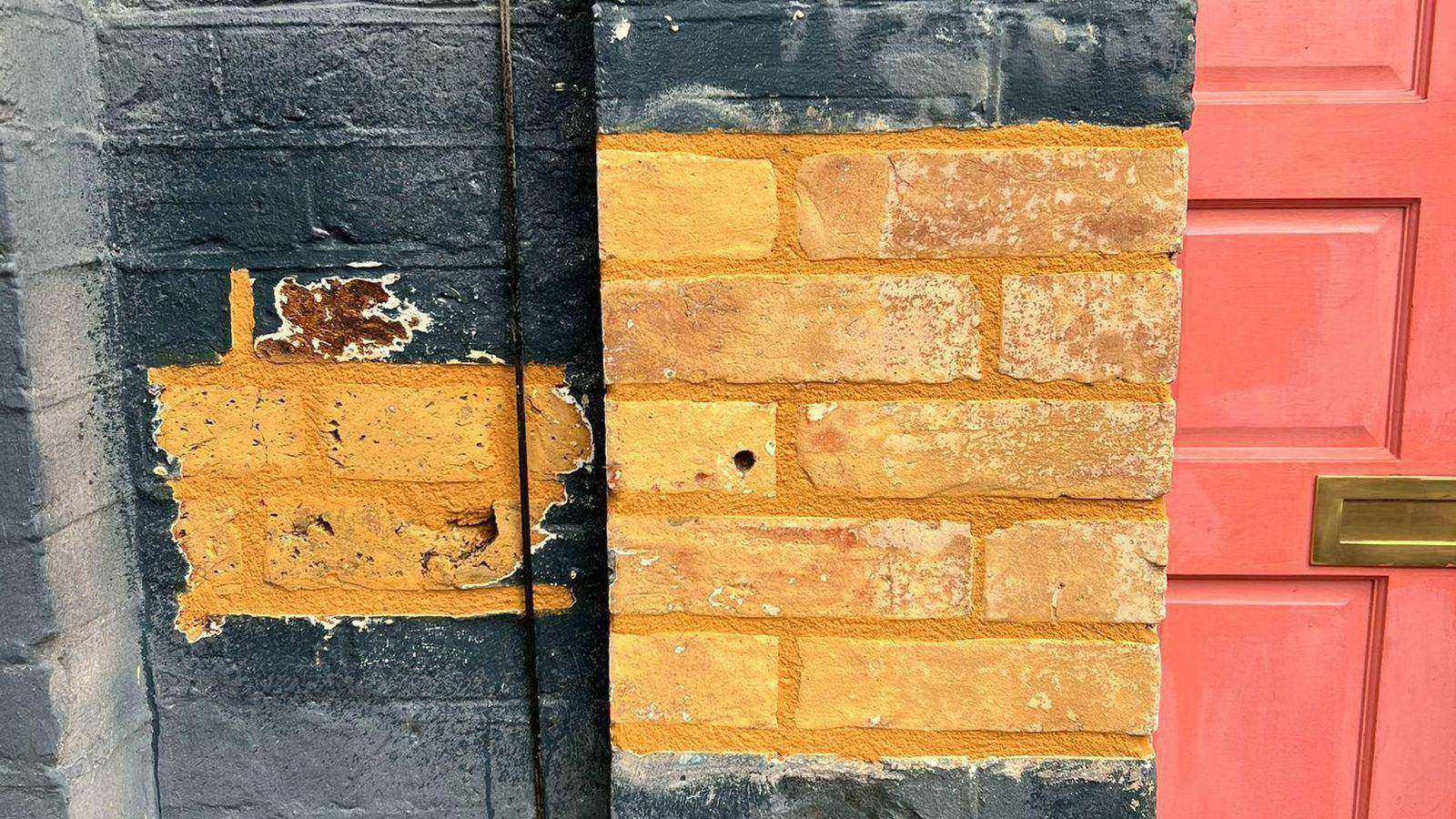
A large number of London houses were rendered or painted at some point in the last century, sometimes for fashion, sometimes to cover damaged brickwork, and quite often as a misguided attempt to solve a damp problem. Taking it off can transform a building. It can also open a larger job than you were expecting, and you should go in knowing that.
Why it is usually worth doing
Cement render and modern masonry paint are both relatively impermeable, which on a solid brick wall works against how the building manages moisture. Water gets in behind through cracks and at junctions, then cannot evaporate out, so it accumulates in the wall. The render then blows and detaches in patches while the brickwork behind quietly deteriorates. Removing it lets the wall breathe again, and on a period property it almost always looks dramatically better.
What might be underneath
Here is the honest part. Sometimes the brickwork under render is in excellent condition, protected all these years, and needs little more than repointing. Sometimes it is not, and there are three common reasons:
- The render was hiding damage. It went on because the brickwork was already poor, and taking it off reveals exactly why
- The wall was never meant to be seen. Some houses were built with cheaper common brick on elevations intended to be rendered or stuccoed from the outset, and there is no handsome facade waiting underneath. Removing render from these is a mistake
- Fixing the render damaged the brick. Cement render is often hacked or scored into the brick face to key it, and removing it can lift faces with it
We investigate before committing. That means opening a trial area, sometimes more than one, to establish what is behind the render and what condition it is in. You then make an informed decision about whether to proceed, with a realistic view of the making good involved. It is a small cost that prevents a very large surprise.
Where the render is historic lime render or stucco rather than modern cement, that is a different situation again, and it may be original, significant and worth repairing rather than removing. On a listed building, removing render will generally require consent.
One programme beats piecemeal
Whole house and facade restoration programmes
Where a building needs several elements dealt with, doing them as one programme is both cheaper and better than doing them piecemeal.
The economics are mostly about scaffold
Access is a substantial part of the cost of any work above ground floor, and it is the same scaffold whether you are repointing, replacing bricks, rebuilding a chimney or repairing stone cills. Paying for it once across a full programme rather than three times across three visits is the single biggest saving available on this kind of work.
The sequencing matters too
Work has a correct order, and getting it wrong wastes money. We stabilise and correct causes before cosmetic work, remove and clean before we repair, and repoint after the brick and stone work so joints finish cleanly.
Investigate and stabilise first
Structural movement and water ingress get diagnosed and dealt with before cosmetic work begins, because everything else depends on the wall being stable and dry.
Correct the causes
Rainwater goods, ground levels, defective copings and flashings, since there is no sense restoring a wall that something is still soaking.
Remove what needs removing
Paint, render and inappropriate cement pointing come off before new work goes on.
Clean
Before repointing rather than after, so cleaning residues and pressure are not applied to fresh mortar.
Repair the fabric
Brick replacement, stone repair, rebuilding of chimneys and parapets.
Repoint
After the brick and stone work, so joints are finished cleanly and consistently.
Final finishing and inspection
A last pass over the elevation, snagging and sign-off.
Where budget will not stretch to everything, we will phase it by priority rather than by convenience. Water ingress and structural issues come first, cosmetic improvement last, and we will tell you plainly what can safely wait a year or two and what cannot. For architects, surveyors and managing agents, we are used to producing specifications suitable for tender, working within a contract administrator's programme and providing the documentation that a conservation consent or a building survey requires.
Our core discipline
Listed buildings and conservation areas
This is our core discipline rather than an occasional sideline. Since 1973 a large part of our work has been on buildings where the specification had to satisfy a conservation officer as well as a client. What that involves in practice:
- Mortar analysis to establish the composition of the original mortar, so the replacement matches in binder, aggregate and strength rather than merely in colour
- Sample panels prepared, cured and submitted for approval before an elevation proceeds
- Materials specified to match, including sourcing reclaimed brick and matching stone by type and bed
- Minimum intervention, retaining as much original fabric as possible rather than replacing wholesale
- Recording, photographing and documenting before, during and after, which consent conditions often require and which is good practice regardless
- Working with your consultants, whether that is a conservation architect, a heritage consultant, a structural engineer or the local authority conservation team directly
One thing to be clear about: obtaining consent is the owner's responsibility, not ours. Works to a listed building generally require listed building consent, and carrying out unauthorised works to a listed building is a criminal offence rather than a planning irregularity. Conservation area status brings its own controls. We will tell you what we believe is likely to need consent and we are happy to provide the technical information your application needs, but you should confirm the position with your local authority conservation team or your architect before work is ordered. It is not a formality and it is not worth the risk.
How we decide what to do
The principles we work to
Restoration is governed by a set of principles that are well established in conservation practice, and they are worth stating because they explain why our recommendations sometimes differ from a general builder's.
- Minimum intervention. Do as much as necessary and as little as possible. Original fabric is not renewable, and a repaired brick is worth more than a replaced one
- Repair rather than replace. Where a brick, a stone or a section of wall can be sensibly repaired or retained, it should be. Wholesale replacement is a last resort, not a default
- Like for like materials. Replacement materials should match the original in composition, strength, permeability and appearance. Not approximately, but properly
- Compatibility over strength. A repair should never be harder or less permeable than what surrounds it. Stronger is not better on an old building, it is the single most common cause of the damage we put right
- Breathability. A solid wall manages moisture by absorbing and releasing it. Anything that interferes with that, whether cement, sealant, impermeable paint or modern render, causes damage somewhere else
- Reversibility. Where possible, work should be capable of being undone by a future generation without harming the original fabric
- Honest repair. New work should be sympathetic but need not pretend to be old. On some elevations a legible repair is better practice than an invisible one, and conservation officers often prefer it
- Address the cause. A repair that does not deal with why the failure happened is a repair with a scheduled repeat
These are not abstractions. They are why we will tell you to fix a gutter before you spend on brickwork, and why we will decline to point your Georgian house in cement even if a competitor has quoted to do exactly that.
Know what to avoid
Restoration mistakes that cause permanent damage
Almost every period building we survey carries the marks of at least one of these. They are worth knowing about both to avoid repeating them and to understand what you may be looking at.
Sandblasting and abrasive cleaning. Removes the fired skin of the brick permanently. Irreversible, and the leading cause of widespread spalling on cleaned Victorian elevations
Cement repointing on a solid wall. Traps moisture and drives it out through the brick faces, which then spall. Extremely common and the reason for a large share of the brick replacement we do
Water repellent sealants and coatings. Sold as protection, they reduce the wall's ability to release moisture and can drive salts and damp deeper into the fabric
Masonry paint over brickwork. Traps moisture, obscures the material, and is extremely difficult to remove later without damaging the brick face beneath
Cement render on a period wall. Cracks, detaches, and conceals deterioration while accelerating it
High pressure jet washing. Drives water into the wall, erodes mortar joints and abrades brick faces
Injected chemical damp courses and internal waterproof renders applied without diagnosing the actual source, which is often a bridged damp course, a raised path or defective rainwater goods that could have been fixed for a fraction of the cost
Angle grinders for raking out joints. Widens joints and takes the edges off bricks, permanently altering the character of the wall
Replacing rather than repairing decorative detail. Once original arches, corbelling and mouldings are removed, what replaces them is a copy
If your building has had any of this done to it, we can assess what is recoverable and what is not, and give you an honest account. Some of it can be reversed. Some of it cannot, and we would rather tell you that at the survey than take your money and disappoint you.
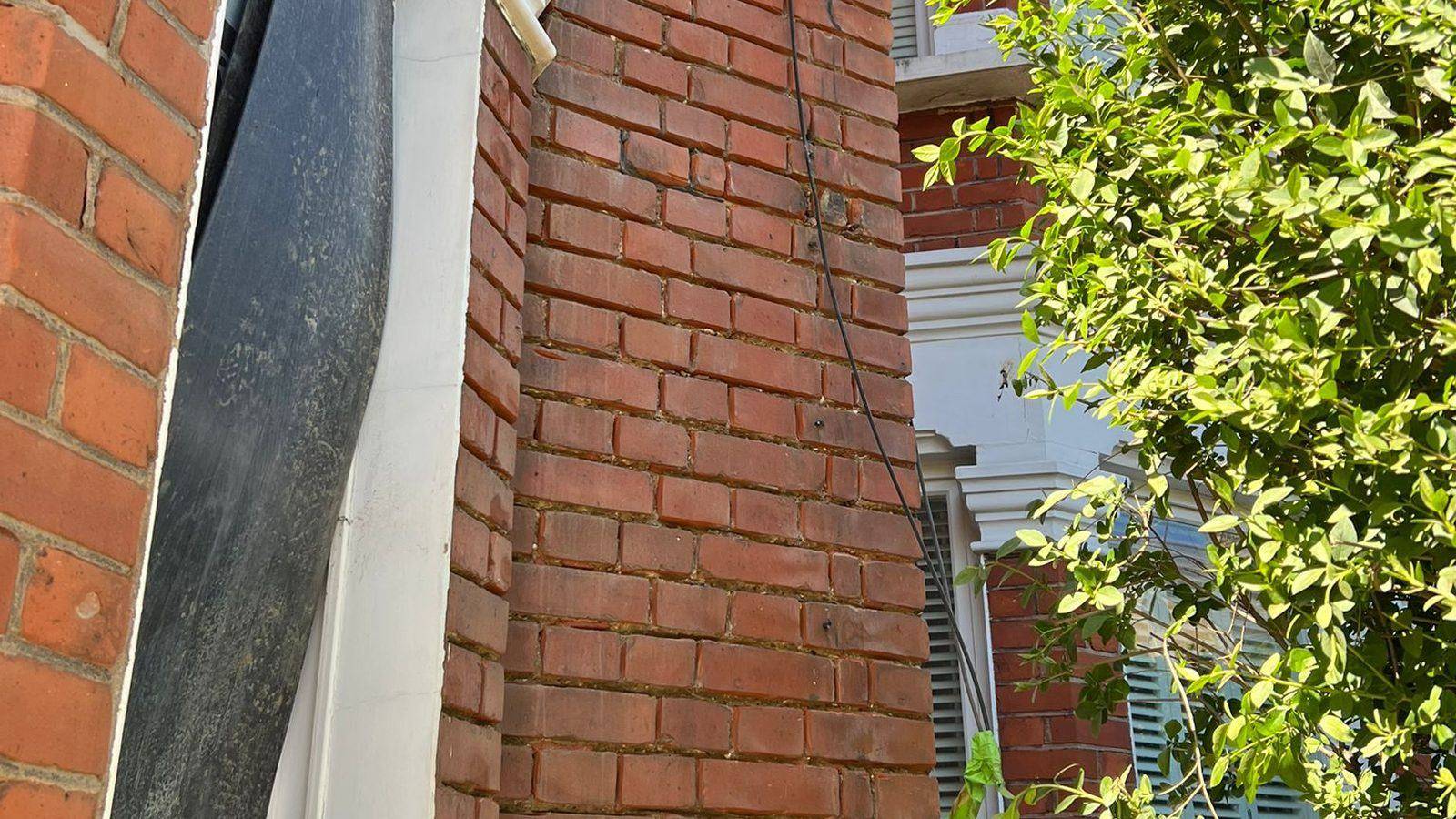
Easier to show than to describe
Before and after
Restoration is difficult to describe and easy to show. A blackened, patched and cement pointed elevation and the same wall cleaned, repointed in matched lime and repaired look like two different buildings, and the photographs make the case better than any specification does.
We are happy to show you completed work from across Knightsbridge and the surrounding area, including projects comparable to yours in age, brick type and scale. Where a client is willing, we can arrange for you to see finished work in person, which on a job of any size is worth an hour of your time. Ask us at the survey and we will put something together relevant to your property.
Transparent pricing
What affects the cost of brick restoration
Restoration is priced from a survey, and there is genuinely no meaningful way to indicate a figure without seeing the building, because the scope is determined by what the survey finds rather than by the size of the house. Two identical terraces can need very different programmes.
- Which elements are needed. Repointing alone is a very different job from repointing plus brick replacement plus a chimney rebuild plus stone repair
- Area of brickwork and how many elevations are in scope
- Access. Frequently the largest single line. Height, street constraints, pavement licences, party wall access to neighbouring land and how long the scaffold has to stand
- Extent of previous inappropriate work. Raking out old cement pointing, removing paint or render and reversing past damage is slow, careful work and often the biggest labour item
- Proportion of brick needing replacement, and whether matching bricks are readily available or need sourcing as reclaims
- Mortar specification, including whether analysis is required and how closely a matched lime mix has to be developed
- Cleaning method and testing, since gentle methods take longer than aggressive ones
- Stone content, which is generally dearer per item than brickwork
- Structural work, including stitching, rebuilding and any engineer's involvement
- Listed building and conservation requirements, covering analysis, sample approval, recording and any specified methods
- Phasing. Splitting a programme across years costs more in total because access is paid for repeatedly, and we will show you both so the decision is informed
- Decorative reinstatement, which is labour intensive and where the money on a fine elevation is best spent
Our specifications are written so they can be compared or put out to tender. That means stated mortar mixes, raking out method, cleaning method, brick sourcing, layer depths where relevant and access assumptions. On restoration work more than any other, a cheaper quote usually reflects a different and more damaging method rather than better value, and the only way to see that is to compare specifications rather than totals.
Step by step
Our Brick Restoration process in Knightsbridge
Survey
We inspect the elevations, the mortar, the brick and stone, the rainwater goods, the ground levels and any evidence of movement, and identify what is causing what rather than simply listing defects.
Investigation where needed
Mortar analysis, trial areas behind render or paint, core samples, and cleaning tests on discreet areas. This is where guesswork gets replaced with information.
Report and recommendation
What needs doing, what can wait, what is beyond recovery and what the underlying causes are, in plain language and in a form you can share with an architect, surveyor or conservation officer.
Written specification and quote
Element by element with materials and methods stated, priced so items can be included, deferred or phased.
Consents and consultation
We support your consent application with technical information and liaise with your consultants and the conservation team where required.
Samples and approvals
Mortar and brick samples and cleaning trials prepared, cured and approved before the programme proceeds.
Access
Scaffold designed and erected for the full programme, with protection to windows, stonework, paths and planting.
Execution in sequence
Stabilise, correct causes, remove, clean, repair, repoint, finish, in that order.
Records
Photographic and written records of what was done where, which consent conditions often require and which is useful to you regardless.
Inspection and handover
We walk the completed work with you and your consultants, deal with anything outstanding, and hand over the documentation and aftercare advice.
Why London Bricklayer
Conservation-grade restoration, diagnosed properly
- Restoring London's period and listed brickwork since 1973, with decades of work to conservation officer specifications
- Conservation principles applied properly, including minimum intervention, like for like materials and compatibility over strength
- Lime and traditional mortars as a core discipline rather than something taken on occasionally
- Brick, stone and structural work under one roof, so a programme is co-ordinated rather than split across trades who blame each other
- Cleaning tested before it is applied, and never by sandblasting historic brickwork
- Diagnosis before specification. We establish causes rather than pricing symptoms
- Used to working with your team, including architects, surveyors, structural engineers, heritage consultants and local authority conservation officers
- Specifications written for comparison and tender, with methods and materials stated so you can judge value rather than headline price
- Fully insured, with public liability cover and safe working on every project
- Covering Knightsbridge, the wider capital and the home counties
Brick Restoration in Knightsbridge: Your Questions Answered
Everything you need to know about brick restoration in Knightsbridge. Still not sure? Just ask.
How long does a restoration programme take?
Where should we start if we cannot do everything at once?
Can we live in the house during the work?
Do you clean by sandblasting?
Should we take the render or paint off our house?
Our house was repointed in cement. Can that be reversed?
Will restoration make the building look brand new?
Do we need listed building consent?
Can you work with our architect or surveyor?
Do you provide sample panels?
Is there a best time of year to do this?
How do we compare your quote against a cheaper one?
Is our building worth restoring, or is it too far gone?
Other brickwork services in Knightsbridge
We provide a whole range of brickwork services for our Knightsbridge clients:
Looking for brick restoration in a nearby area?
We also cover surrounding areas across London and the home counties:
Covering Knightsbridge
We work throughout Knightsbridge (SW1X, SW3) and the surrounding London areas. Get in touch to check we cover your street, we almost certainly do.
Arrange a free restoration survey
Whether you have a single elevation that has deteriorated since it was repointed in the wrong mortar, a rendered house you suspect has good brickwork underneath, or a listed building needing a full programme, the survey costs nothing and it is where the useful conversation starts. We will tell you what is happening to your building, why, and what it actually needs. Working across Knightsbridge, the wider capital and the home counties. Fully insured. Restoring London’s period and listed brickwork since 1973.