
Repointing in Walthamstow
Hand-raked joints and colour-matched mortar that keep your brickwork weathertight for years to come. Serving Walthamstow (E17) and the surrounding areas.
Free repointing quote in Walthamstow
Send us the details and we will be straight back to you.
Heritage & conservation specialists
Lime-based restoration of period and listed buildings.
Structural brick stitching
Helical-bar repairs that strengthen cracked and bowing walls.
Trusted across London
Fully insured, working across the capital and home counties.
Repointing across Walthamstow
New joints, not a new wall
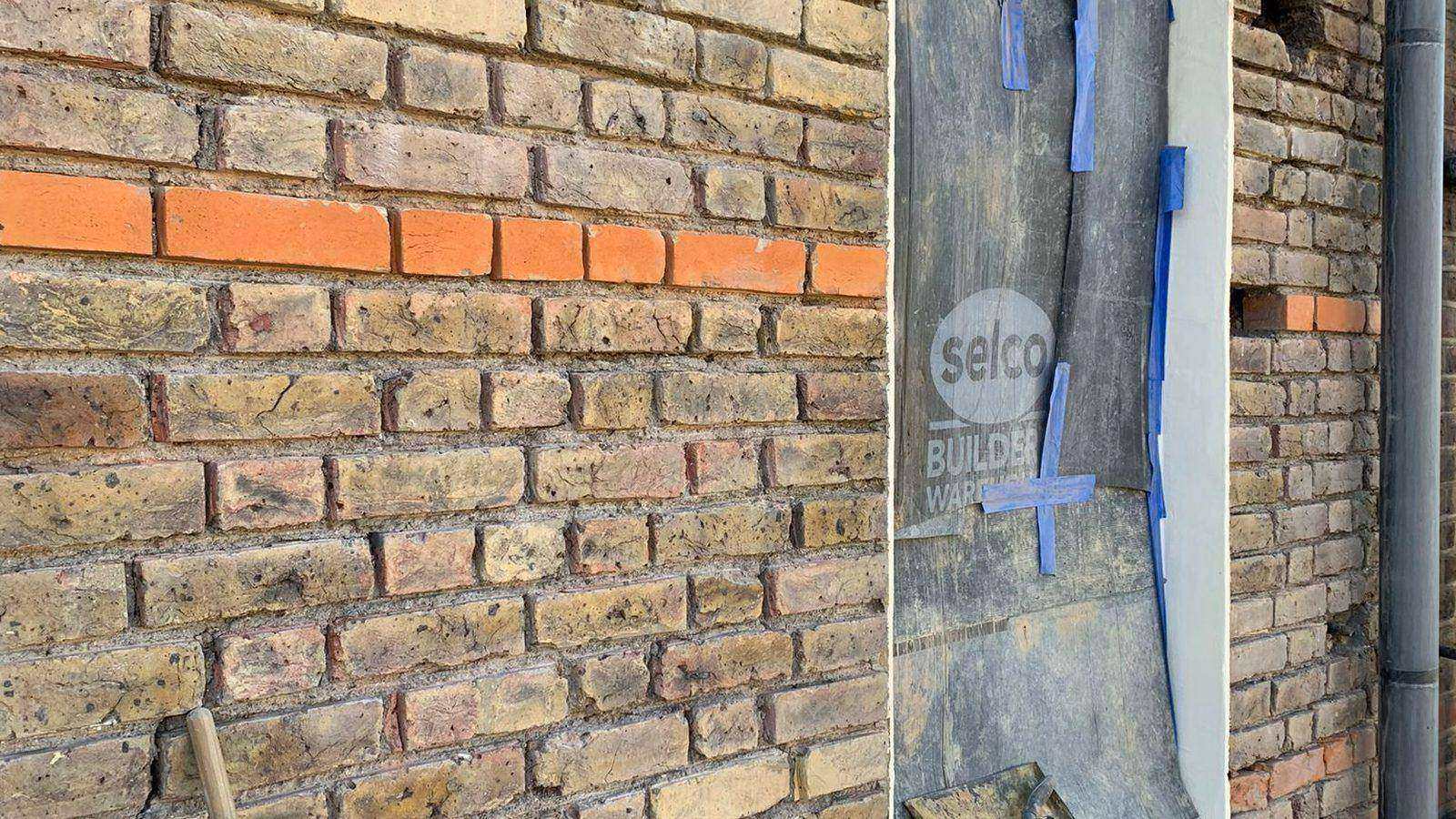
Repointing means raking out the old, worn mortar from between the bricks and replacing it with a fresh mix, so the wall is weathertight again. The bricks stay where they are. It is only the joints that are renewed, and on a London property those joints are a surprisingly large proportion of what you actually see.
It also happens to be the job most often done badly. Repointing a period property in the wrong mortar causes more damage than leaving it alone, and a great deal of the remedial work we are called to is putting right somebody else's repointing rather than the original brickwork.
London Bricklayerhave been repointing London's period and listed buildings since 1973, in lime and in cement, matched to what the wall actually needs. Working across Walthamstow and the surrounding area. Free assessment, mortar matched to your existing joints, and a sample panel before we do the whole elevation.
Know the signs
Signs your brickwork needs repointing
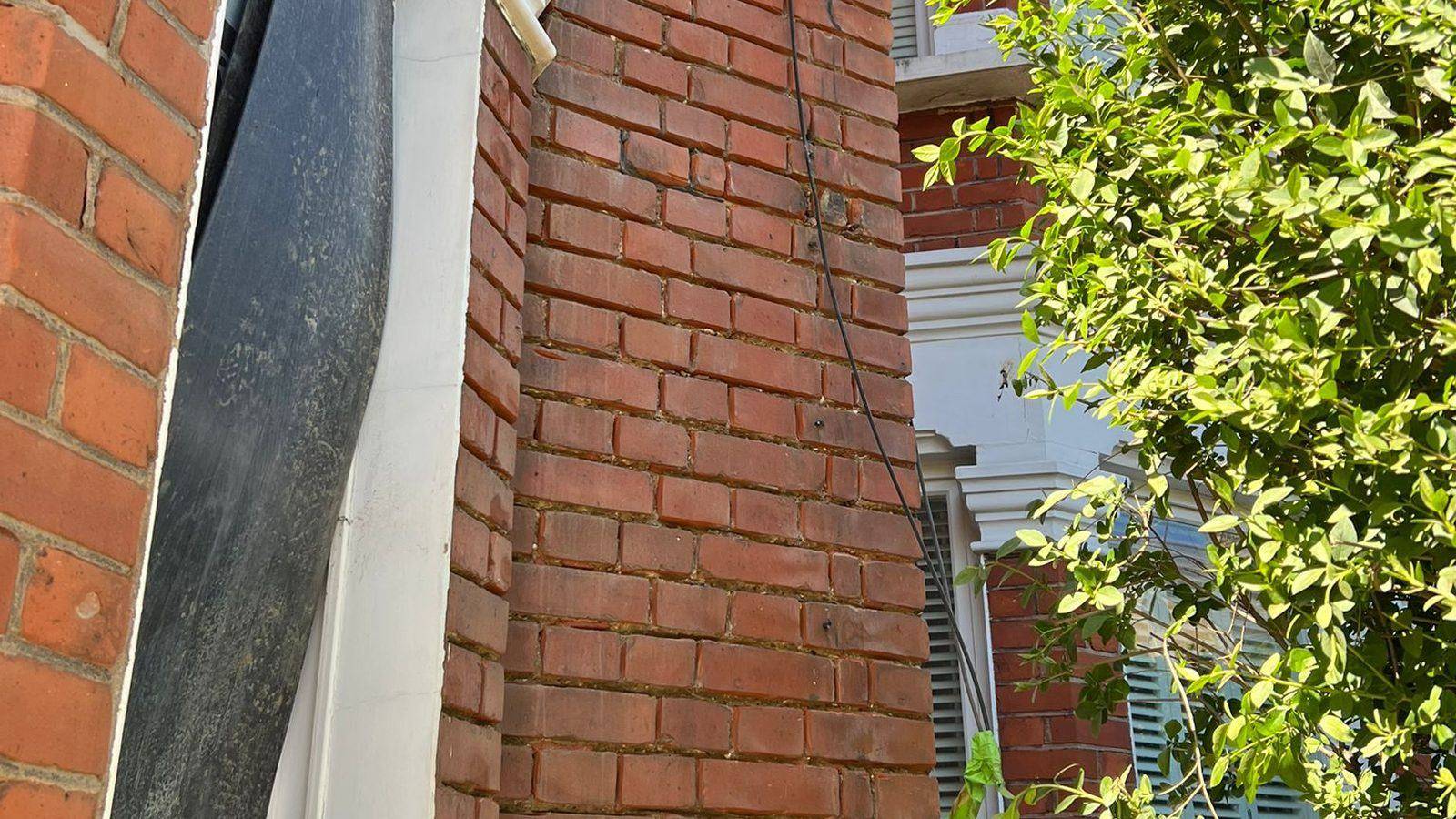
Mortar is meant to be the part that wears. It is sacrificial, deliberately softer than the brick, so that weathering and movement are taken up by the joint rather than by the brick face. Eventually it gives up, and these are the signs:
- Joints that have receded so the brick edges stand proud and the mortar sits well back from the face
- Mortar you can rake out with a screwdriver or even a finger, coming away as sand or loose crumbs
- Hollow or missing sections, particularly on exposed elevations, at high level and around chimneys
- Damp patches inside on external walls, often appearing after driving rain rather than continuously
- Spalling or blown brick faces, where the surface of the brick has flaked off, which frequently means water is getting in and freezing
- Moss, weeds or plant growth in the joints, which both indicates the joint is holding water and opens it further as roots establish
- Previous patch repairs failing or standing out visibly from the surrounding wall
- Cracked or stepped joints, which can indicate movement rather than simple wear and should be looked at properly before anything is pointed
If you are seeing cracking rather than wear, repointing is not the answer on its own. Cracks that step through several courses usually mean the wall has moved, and pointing over movement just hides it until it opens again. That is a structural question first.
The decision that matters most
Lime or cement: why the mortar matters more than the workmanship
This is the single most important decision on a repointing job, and it is the one most often got wrong. Neat workmanship in the wrong mortar is still a job that will damage your wall.
How a period wall is meant to work
Older solid wall buildings have no cavity. They handle moisture by absorbing it and then letting it evaporate back out, and the mortar joints are the main route for that. Lime mortar is softer and more permeable than the brick around it, so moisture leaves through the joint and any movement is taken up there too. The joint wears instead of the brick, and when it has worn enough you repoint it. That is the system working as designed.
What happens when you point it in cement
Cement mortar is harder and considerably less permeable than most period brick. Point a solid wall in cement and you seal the route the moisture was using. It does not stop the wall getting wet, it just changes where the water comes out, which is now through the face of the brick. In frost that trapped moisture expands and takes the brick surface off with it.
The result is spalled, crumbling brick faces on a wall that was sound before it was repointed, and once the brick face has gone it cannot be put back. The joints usually still look fine, because the cement is harder than the brick it is destroying. That inversion is the whole problem: the sacrificial element is now the strongest part of the wall.
The same logic applies to the mix strength. Even within lime, an unnecessarily strong mortar on a soft handmade brick will do damage, which is why we assess the brick as well as the existing mortar rather than defaulting to a standard mix.
When cement is the right answer
Modern cavity brickwork is generally fine in a cement based mortar to the specified mix, because the wall is designed to work that way and the cavity deals with the moisture. We are not lime purists for the sake of it. The point is to match the mortar to the wall, and on a 1970s cavity house that means cement.
We will tell you which yours needs and explain why. If you have been given a quote for cement pointing on a Victorian or Georgian property, it is worth asking the question before you accept it.
What to look out for
Bad repointing, and the damage it causes
Worth knowing what to look for, whether you are choosing a contractor or trying to work out why your wall looks worse than it did five years ago. These are the common mistakes, roughly in order of how much damage they do.
Cement over lime
Covered above, and it is the most damaging by a wide margin because it destroys brick faces rather than just looking wrong. Reversing it means raking the cement back out, which is slow, careful work and cannot recover brick that has already spalled.
Angle grinder damage
Raking joints out with an angle grinder is fast, which is why it gets used. On tight period joints the disc is wider than the joint, so it cuts into the brick above and below, taking the arrises off and leaving a wall of chipped, squared edges and joints that are now too wide. You cannot undo this. The tell is unnaturally even, wide joints with nicked brick edges and occasional overrun cuts in the brick faces.
Not raking out deep enough
New mortar needs enough depth to key in and hold. Scraping the surface and skimming fresh mortar over the top gives a joint that looks new and falls out within a few winters, because it is bonded to nothing but the failed mortar behind it. Raking out should reach sound material, typically a depth of at least twice the joint width.
Smeared and slurried joints
Pointing mortar dragged across the brick faces and left there, sometimes deliberately to hide poor joints. It leaves a grey haze over the brickwork and on absorbent period brick it stains permanently. Cleaning it off later risks damaging the face.
The wrong joint profile
The profile is not decoration, it sheds water. A joint left proud of the brick face, or finished with a ledge, holds water against the brickwork rather than shedding it. Strap or ribbon pointing, where a raised band of mortar is applied over the joint and across the brick edges, is both wrong functionally and unmistakable visually, and it is common on badly repointed London terraces.
Pointing over a wall that needed something else
Repointing a wall with active movement, failed lintels, a bridged damp course or defective rainwater goods treats the symptom and leaves the cause. The pointing then fails and everyone blames the pointing.
If any of this sounds like your wall, we can look at it and tell you honestly what is recoverable, what needs raking back out and what is unfortunately permanent. Not everything can be fixed, and we would rather say so than sell you a job that will not deliver.
Step by step
Our Walthamstow repointing process
Assessment
We look at the existing mortar, the brick type and condition, the exposure of each elevation and how the wall is built, and check whether what you are seeing is wear or something else.
Mortar specification and matching
We establish what the existing mortar is and specify a replacement that suits the brick, matching colour, aggregate and texture. On listed work this may be a condition of consent.
Sample panel
We point a small trial area and let it cure, so you can see the actual colour and profile against your wall before we commit to the elevation. Wet mortar looks nothing like cured mortar, which is why judging from a bucket is a mistake.
Access
Scaffold or tower erected as the elevation requires, with protection to windows, paths and planting.
Raking out
Joints cut out by hand to sound mortar and to sufficient depth, using hand tools on period brickwork rather than grinders. Slower, and the only way to do it without damaging brick edges.
Cleaning and dampening
Joints brushed and blown out, then dampened, so the new mortar bonds properly and does not have its water sucked straight out by dry brick.
Pointing
Mortar packed into the joint in layers where depth requires it, well compacted rather than smoothed over a void.
Finishing to profile
Joints struck or brushed back to the agreed profile at the right moment in the cure, which is a matter of timing and judgement rather than a step you can rush.
Protection and curing
Lime work protected from sun, wind, rain and frost while it carbonates, using sheeting and dampening as conditions require. This stage is where lime jobs are made or ruined.
Clean down and handover
Brickwork brushed off, site cleared, and we walk the elevation with you.
An invisible repair
Matching the mortar and joint profile
A repointed elevation should not announce itself. Getting that right is mostly about three things.
- Colour and aggregate. Mortar colour comes principally from the sand, so matching means finding the right aggregate rather than adding pigment to a standard mix. We mix to sample and let it cure before deciding, because mortar dries considerably lighter than it looks wet
- Texture. An original lime joint has a coarser, more open texture than a smooth modern mix, and a fine sand will read as obviously new even in the right colour
- Profile and joint width. Struck, weathered, bucket handle, flush and recessed joints all shed water and catch light differently. Period London brickwork often has finer joints than modern practice, and matching the width matters as much as the shape
Where we are repointing part of an elevation rather than all of it, we will be honest about how well it will blend. A patch into weathered mortar will always be detectable at close range, and sometimes the better answer is to point the whole elevation to a clean edge such as a corner or a string course rather than leave a visible island of new work.

The most weathered brickwork on the house
Chimney repointing
Chimneys almost always need repointing before the rest of the house, and there is a straightforward reason: a stack is exposed on all four sides, stands above the roofline in the full weather, and gets heated and cooled from the inside as well. It is the most weathered brickwork on the building by a considerable margin.
What we deal with on a stack:
- Repointing the stack above and below the roofline, including the parts that are hardest to reach and therefore most often skipped
- Flaunching, the mortar bed holding the pots, which cracks and lets water straight down into the stack
- Pot bedding and replacement where pots are loose, cracked or missing
- Spalled and eroded bricks replaced while the access is up
- Assessment of the stack's condition generally, since a badly eroded stack sometimes needs rebuilding rather than pointing, and it is better to know that before the scaffold goes up
Access is the main cost driver on chimney work rather than the pointing itself, which is why it is worth doing everything the stack needs in one visit rather than paying for scaffold twice. Where flashings or ridge tiles also need attention, tell us and we will factor it into the access planning even where the roofing itself is someone else's trade.
Transparent pricing
What affects the cost of repointing
Repointing is generally priced by area, so per square metre of wall, with access priced separately. Two houses of the same size can differ substantially once you look at what is actually involved, and the biggest variables are the ones a quote over the phone cannot see.
- Area of brickwork and how many elevations are included
- Height and access, since scaffold is often a significant part of the total and a three storey London terrace costs considerably more to reach than a garden wall
- How the raking out has to be done. Hand raking on period brickwork is slower than mechanical cutting and it is the single biggest labour variable. It is also the difference between a wall with its brick edges intact and one without
- Depth and condition of the existing joints, as badly eroded or previously cement pointed joints take much longer to clear
- Removing previous cement pointing, which is slow, careful work and priced accordingly
- Mortar specification, with matched lime mixes costing more than a standard cement mortar in both material and time
- Joint profile, since some finishes take longer to execute consistently than others
- Brick condition, and whether spalled or damaged bricks need cutting out and replacing while the access is up
- Curing and protection requirements, as lime work needs sheeting and monitoring rather than simply being left
- Site constraints, including London parking, restricted access, pavement licences and delivery limitations
- Listed building or conservation requirements, where a specified mortar analysis or sample approval process applies
Our quotes are itemised and state the mortar specification, the raking out method, the joint profile and what access is included, so you can see exactly what you are buying. That also makes comparison meaningful: if one quote is dramatically cheaper than the others, it is usually because it assumes cement mortar and grinder raking out, and on a period property that is not a cheaper job, it is a different and worse one.
Straight answers
Is there a cheaper alternative to repointing?
Sometimes, and it is a fair question rather than a naive one. Honest answers:
Patch pointing works when the failure is localised. If one exposed elevation or the top few courses have gone and the rest is sound, there is no reason to point the whole house. We will tell you where the sound mortar starts. The trade off is that new work next to weathered work is visible, so we will discuss where to stop.
Phasing over several years is legitimate. Point the worst elevation now and the others as budget allows. Deal with the exposed and high level areas first, since that is where water gets in, and leave sheltered elevations. This is a sensible way to manage cost, and we are happy to price it in stages.
Sealants and water repellent coatings are usually a bad idea on period brickwork. They are marketed as an alternative to repointing and they work by making the surface less permeable, which on a solid wall is precisely the wrong move: it traps moisture in the wall and pushes the problem into the brick face, the same mechanism as cement pointing. They also do nothing about joints that have physically lost material. On modern brickwork they are less harmful but still not a substitute for a failed joint.
Pointing over the top of failed mortar is not a cheaper option, it is a wasted one. It will fall out within a few winters and you will pay again, this time including the cost of removing the first attempt.
Doing nothing is occasionally the right call. If the joints are weathered but sound and you are not getting damp, monitoring for a year or two costs nothing. We would rather tell you that and see you later than take money for work that is not needed yet.
When we can start
Timing and weather
Repointing is more weather dependent than most brickwork, and lime much more so than cement. It is worth understanding because it affects when you can realistically book the job.
- Lime needs frost free conditions while it cures. Frost on green lime mortar destroys it, so lime repointing is generally a spring to autumn job and we will not start one going into a cold spell just to fill the diary
- It also needs protecting from drying too fast. Hot sun and drying wind pull the water out before the mortar has carbonated, giving a weak, dusty joint. Sheeting and dampening manage this, which is why protection is part of the job rather than an optional extra
- Heavy rain during and shortly after pointing washes fresh mortar out of the joint, so work is planned around the forecast
- Cement pointing has a wider working window but still needs to be above freezing and protected from heavy rain
The practical upshot: if you want lime repointing done, enquire in winter and book for the season rather than expecting to start in January. If someone offers to lime point your house in a hard frost, that is a warning sign in itself.
Why London Bricklayer
Lime specialists, not lime tourists
- Repointing London's period and listed buildings since 1973, including work to conservation officer specifications
- Lime specialists, not lime tourists. Traditional mortars are our core discipline rather than something we take on occasionally
- Hand raking on period brickwork, because keeping your brick arrises intact is worth the extra time
- Mortar matched to sample and cured before approval, so the colour you sign off is the colour you get
- Sample panels as standard on any job where appearance matters
- Straight advice on what you actually need, including telling you when patching, phasing or waiting is the better answer
- Fully insured, with public liability cover and safe working on every project
- Itemised quotes stating mortar, method and profile, so you can compare properly rather than on headline price
- Covering Walthamstow, the wider capital and the home counties
Repointing in Walthamstow: Your Questions Answered
Everything you need to know about repointing in Walthamstow. Still not sure? Just ask.
How long does repointing last?
How long will the job take?
Do we need scaffolding?
Will you match our existing mortar?
Can you repoint just one elevation or one section?
Do we need to move out or cover things up?
Our house is listed or in a conservation area. Does that change things?
How can we tell if our last repointing was done badly?
Do you provide a sample panel before doing the whole wall?
Can you repoint in winter?
The mortar is fine but some bricks are crumbling. Is that a repointing job?
Should we repoint before selling, or before a survey?
Other brickwork services in Walthamstow
We provide a whole range of brickwork services for our Walthamstow clients:
Looking for repointing in a nearby area?
We also cover surrounding areas across London and the home counties:
Covering Walthamstow and nearby
We work throughout Walthamstow (E17), including Highams Park, Wood Street, Blackhorse Road, Upper Walthamstow, St James Street, Leyton, and the surrounding London areas. Get in touch to check we cover your street, we almost certainly do.
Get a free repointing assessment
Whether your joints have simply worn out, a previous repointing has been done in the wrong mortar, or your chimney has reached the point where it needs attention, we will look at it properly and tell you what the wall actually needs. Working across Walthamstow, the wider capital and the home counties. Fully insured. Repointing London’s period brickwork since 1973.